Tuesday, September 22, 2026

 Tom Fulton, a solid friend


I met Tom in 1985.  He was the liaison to the LGBTQ community from the office of newly elected Los Angeles City Councilmember Mike Woo and I was the training coordinator for the Gay and Lesbian Police Advisory Task Force of Los Angeles, a community action group that had been formed to deal with ongoing issues with the LAPD.  The group had mostly been reactionary, and had not yet clearly articulated a vision to move from a defensive position to a proactive body that could actively change the department’s culture and policies in a way that would end what was a hostile relationship between our community and the LAPD.  


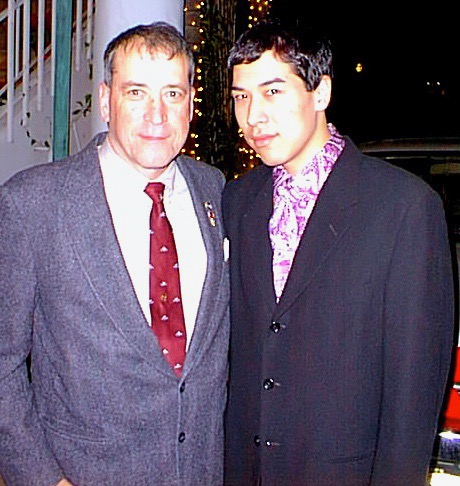
Tom Fulton, 1985


I found an ally in Tom because he also understood that the only way to move our community forward was to work towards departmental change.  Like me, he was visionary in terms of what was needed to change the culture of the department.  


In addition to our regular trainings at the “Jack Webb Los Angeles Police Academy” we arranged to do a “roll call” training at the Rampart division.  At the beginning of each shift, there is a brief meeting, approximately 20 minutes where the commanding sergeant reviews issues that have emerged in the area that officers need to be aware of.  We got ten minutes, three times that day to do a very brief presentation.  They were a very difficult audience to “work.”  For most of them, we were the first “faggots” they had interacted with outside of arresting and booking.  In one of the meetings, one officer sat in the back of the room, glaring at us while stroking his shotgun.  Tom was a a trouper, never flinched or wavered in his delivery.


A close and lasting friendship developed.  The relationship he was in had ended and that was very difficult for him.  Like other single people, he worked his way through all the dating insanity of being young and trying to find a genuinely loving relationship, complete with the frustrations of “near misses” and other disappointments.  


Around the beginning of 2000, the last asset of his earlier relationship was finally dissolved and distributed and he bought a condo in West Hollywood.  He renovated it, I actually installed the over the range microwave he purchased, and he settled into what he thought would be a long life of living single.  The Democratic National Convention had come to town and in a very chance encounter, he met Robert at one of the West Hollywood bars.  They hit it off instantly.  Both shared passions for history, culture, politics, public policy, and had similar aesthetic tastes.  I met Robert later, he had an extra ticket to the convention, so I got to sit in one of the nosebleed seats, literally on the upper back wall in the room, and it was magic.


Tom and Robert, 2002


I knew almost instantly that Robert was the great love of his life, the other half of a life that would blossom and grow into a beautiful life together.  Their life together always inspired me and gave me hope that in spite of struggles, AIDS, and other challenges, love could come in the most unexpected times of our lives.  


Tom and Robert built a beautiful life together.  Like all of life, things will change and evolve, and we will all carry the gifts that Tom gave us, hopefully inspired by his legacy to continue the work to bring about a more just and loving world.  


What follows are some of the many photos I've collected of them over the years.  I hope you enjoy them.


Tom, Ed and Robert, 2004


Tom loved animals, here with my mother's dog "Treasure" 2002


Robert & Tom 2004


Tom & Robert 2004

 
Tom & Robert 2024


Tom & Robert 2026


Tom & Robert 2026


Robert & Tom 2026


Tom 2026


Tom 2026


Tom was that rare friend who was loyal to a fault.  He always showed up to help me move, always supported my life and work, and always passionately championed the cause of LGBTQ Rights in this very broken world we live in.  


We will all miss him.  And his spirit will continue to hover around us who knew him, because he will continue to remain in our hearts as long as we live.  


Yours in Christ,  Edward George Garren, MA, LMFT

Sunday, April 3, 2022

Love Till It Hurts~a Slavic legacy~a family tradition

 One of the definitions of passion is an intense desire or enthusiasm for something. 

In her book "Singing & Swinging & Gettin Merry Like Christmas", Maya Angelou tells of her travels through Europe and the Middle east with a road show of "Porgy & Bess". While in Yugoslavia, she discovers that the Slavs are the most passionate people in Europe, perhaps the world. 

Certainly, I have been blessed (or cursed) with that aspect of my father's blood.


Our dad, at 78, doing his infamous 
"Hoochee Coochee by the Withlacoochee"

In case you missed that part of the story, Garren is my father's adopted last name. He took it from his first step-father when he was five because it sounded more "American" than Vremsak.  His father was Louis Frank Vremsak.  A separate story about that history is here:  How Louis Vremsak became Edward Voltaire Garren

My grandmother was French and Serbian.  She had grown up in orphanages all over Europe. We suspect she was a "mail order briide" which is how the Catholic church sent many adult orphans out of Europe in the early 20th century.  We only have her name on his birth certificate, except there is no record of any person with her name ever entering the U.S. so she had already changed it by the time our dad was born.


Passion is not an easy gift. Most of my life I've had a secret desire to be small, quiet and pretty. From my tall, big and loud vantage point, being demure seems like less work. I'm sure the demure among us would disagree, the grass is always greener on the other side. 


Louis/Edward in his early 20's

Just like the stories of my grandfather I've heard, and the experience of watching my father, my heart gets me in trouble. If it was only romance perhaps it wouldn't be so bad, but it's life, with all it's full richness, variations of humanity, and the generous nature of God. On some deep level, I'm just so glad to be alive, and I want to share a good thing. 

I'm drawn to other passionate people. I loved watching American philosopher Eric Hoffer talk about his life and what he'd learned. 

Maya Angelou was one of my first loves. The sharing of her struggle to embrace her "difference", and the swirling passions of her being, provided me with solace and inspiration. 

My father, like Maya, was an Aries. Perhaps one of the more passion filled signs of the western zodiac, these youthful fire signs see the world as a place to explore and conquer. Their "Devil May Care" attitude, laced with the never spoken fear of being extinguished before their time, makes for interesting times. As our mother Edna said often, "Your father was many things, boring was not one of them." 


Being his favored child (the one most like him in spirit and peresonality) meant catching the full brunt of his internal torment, which was legendary. 

Thoughts on his torment are in this story:  Ode to our Father

But it also meant I was his confidant and comrade. Our finest hours were spent in the car during my early teens, when he was collecting his "ninety day no pay" past due accounts.  

Edward Voltaire Garren was the consummate "Finance Man". In his younger days, he put Commercial Credit of Tampa Florida on the business map. He built up their business from a small office, to the largest consumer credit company in Tampa. They financed autos, furniture, appliances, and home improvements. His innovative style moved the corporation into strategic niche markets, easily eclipsing the competition.  He was an early pioneer in the consumer credit industry. He enjoyed helping people, and helping people with money problems fulfilled that passion of his, even if they got behind with their payments.

In Dade City he managed a loan company, American Finance. Years later I would run into people who would tell me that his willingness to take a chance on them financially had changed their lives. 

One, the first Black Bail Bonds woman in the state of Florida, Mary Alice Dorsett, recounted how he had lent her money to put down on her first piece of commercial property in Tampa. She was a single mother, an entrepreneur in the early 1960s and against all odds, he had lent her the final $600 she needed for the down payment. When I asked him about it, he simply stated, "I knew her people, they were all honest and hard working.  Mary Alice Dorsett is listed in the Hillsborough County Women’s Hall of Fame. Mary Alice Dorsett Pioneering Black business woman and other articles relating to the history of Tampa.

My father and I would ride together and he would tell the stories of his life, and his passions in between his stops to get payments. He was a pro and I learned a lot from him. 

If you've ever seen "Big  Fish", my father was his own version of Edward Bloom and he cut a wide swath on the path of life. 

One evening, during one of our travels, riding through the swamp in our 1961 Corvair Monza, he shared with me one of his inner secrets. "We're not like most people, we've been given a special gift, we have the ability to remind people they are special.  Most people spend lives of quiet desperation, and no one ever notices them. You and I light up a room when we walk into it. You should always take the time to share yourself with people. Remember their names, tell them a joke or a funny story, help them to laugh, give them a moment that makes them feel special, because they are, but few take the time to remind them of it." 

My father left a trail of folks that felt special for having known him. I've tried to honor his legacy, even when it hurts. I think this is the nature of creation and of God, to love till it hurts. Otherwise life gets routine all too quickly. 

Our dad was born on April 4th, 1909. 


Monday, August 16, 2021

My brain and heart divorced a decade ago


My brain and heart divorced

a decade ago

over who was

to blame about

how big of a mess

I have become


eventually,

they couldn't be

in the same room

with each other


now my head and heart

share custody of me


I stay with my brain

during the week


and my heart

gets me on weekends


they never speak to one another


- instead, they give me

the same note to pass

to each other every week


and their notes they

send to one another always

says the same thing:


"This is all your fault"


on Sundays

my heart complains

about how my

head has let me down

in the past


and on Wednesday

my head lists all

of the times my

heart has screwed

things up for me

in the future


they blame each

other for the

state of my life

there's been a lot

of yelling - and crying

so,


lately, I've been

spending a lot of

time with my gut


who serves as my

unofficial therapist


most nights, I sneak out of the

window in my ribcage


and slide down my spine

and collapse on my

gut's plush leather chair

that's always open for me


~ and I just sit sit sit sit

until the sun comes up


last evening,

my gut asked me

if I was having a hard

time being caught

between my heart

and my head


I nodded


I said I didn't know

if I could live with

either of them anymore


"my heart is always sad about

something that happened yesterday

while my head is always worried

about something that may happen tomorrow,"

I lamented


my gut squeezed my hand

"I just can't live with

my mistakes of the past

or my anxiety about the future,"

I sighed


my gut smiled and said:

"in that case,

you should

go stay with your

lungs for a while,"


I was confused

- the look on my face gave it away


"if you are exhausted about

your heart's obsession with

the fixed past and your mind's focus

on the uncertain future


your lungs are the perfect place for you


there is no yesterday in your lungs

there is no tomorrow there either


there is only now

there is only inhale

there is only exhale

there is only this moment


there is only breath


and in that breath

you can rest while your

heart and head work

their relationship out."


this morning,

while my brain

was busy reading

tea leaves


and while my

heart was staring

at old photographs


I packed a little

bag and walked

to the door of

my lungs


before I could even knock

she opened the door

with a smile and as

a gust of air embraced me

she said

"what took you so long?"


~ john roedel

Wednesday, June 3, 2020

June Solnit Sale, a 40s protester sees Trump-era parallels

"When I despair, I remember that all through history the ways of truth and love have always won. There have been tyrants, and murderers, and for a time they can seem invincible, but in the end they always fall. Think of italways."
Mohandus “Mahatma" Gandhi

BY Bill Boyarsky | PUBLISHED Apr 26, 2017 | Bill Boyarsky


In November 1943, June Sale, a UCLA student, was part of a demonstration at Los Angeles Polytechnic High School against Gerald L.K. Smith, the most prominent anti-Semite of the time.
Listening to the speeches inside the auditorium, she recalled recently, “I became nauseated and teary. I decided to leave.  As I got to the foyer of the auditorium, a police officer arrested me, told me I was disturbing the meeting and walked me to the police paddy wagon.”
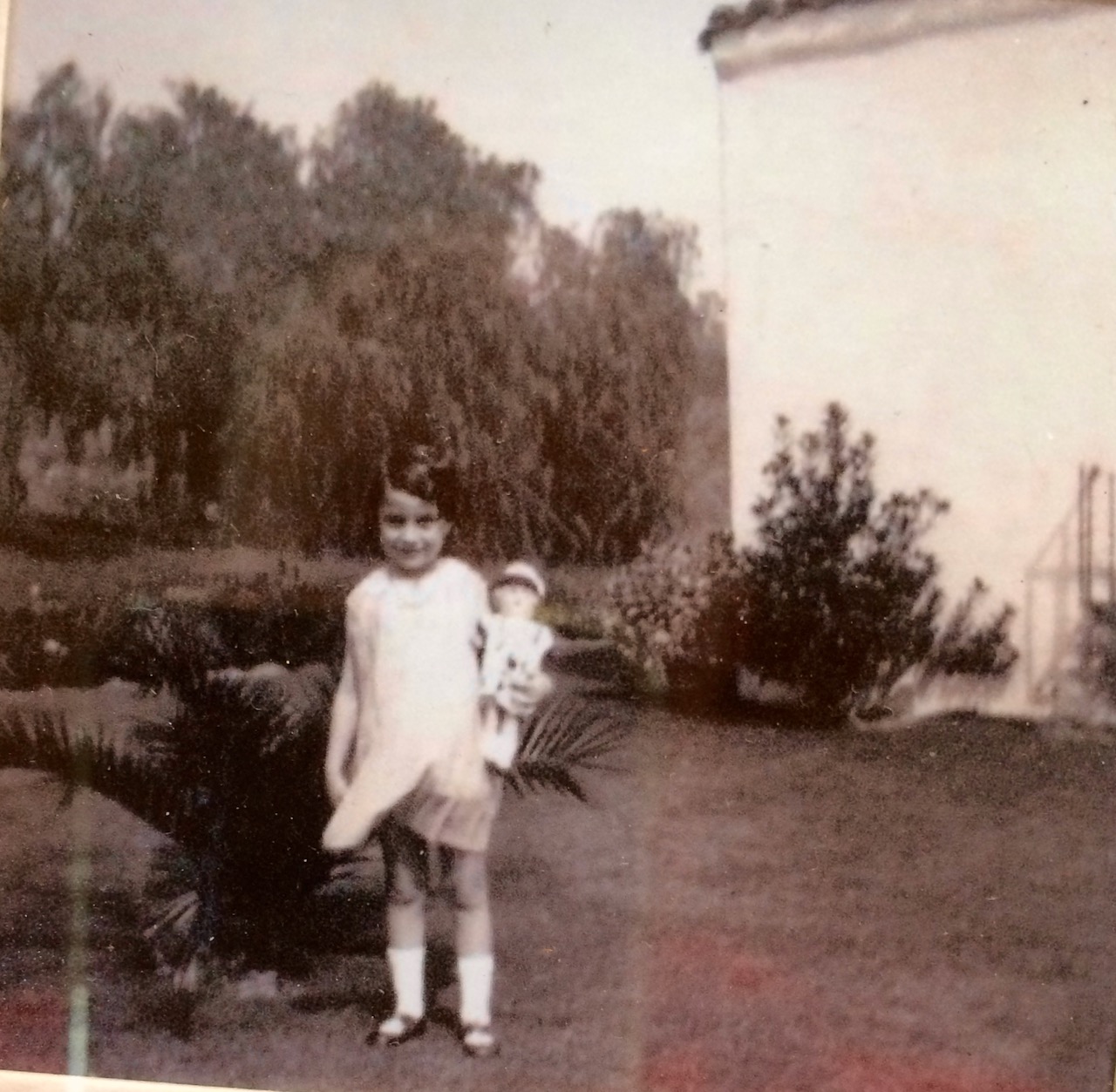
June when she was a girl in Sierra Madre California
I learned of her long-ago bust in one of the emails she sends to friends, often writing of her anger over where President Donald Trump is taking the country. I was intrigued by the story of her arrest, and by the picture she included of herself talking to her lawyer before going on trial, which appeared in the now-defunct Los Angeles Daily News (the one that folded in 1954, not the current Woodland Hills-based newspaper). I wanted to know more. So my wife, Nancy, and I talked with her early in April over lunch at her home above Sunset Boulevard. We have been friends since we met June and her late husband, Sam, on Barbara Isenberg’s London theater tour several years ago.
As she told the story of her life, I saw that it reflected an almost forgotten era of Jewish Los Angeles, when anti-Semitism was rampant and a beleaguered Jewish community pondered how to fight it. “It was just something that happened to me over and over again,” she recalled of the anti-Semitism of her high school days in Pasadena.
June was born at White Memorial Hospital in Boyle Heights in 1924. Boyle Heights was then home to immigrants of many ethnicities and a hotbed of Jewish progressive politics.  Her parents, Ben and Bertha Solnit, were immigrants from a town on the Russian-Polish border. Ben learned the shoe business from the bottom up and grew prosperous. When their son was ill with bronchitis, his pediatrician advised them to move to a hotter, drier place. They chose Sierra Madre, near Pasadena, a center for right-wing politics and one of several communities riddled with anti Semitism.
Although Jews were among the founders of Los Angeles in the 19th century, Midwesterners who made the growing city a white Protestant conservative place soon outnumbered them. Restrictive covenants kept Jews — and African-Americans, Asians and Latinos — from some neighborhoods. Clubs would not admit Jews nor would fancy downtown law firms hire them.
In high school, June said, “all my friends who were not Jewish joined sororities and they were told not to talk to me.”   When she was elected president of a student YWCA group in junior high school, a vice principal said she could not accept the job because the group recited Christian prayers and Jews could not join them.
The Solnits wouldn’t take it. “I’m a better citizen then you’ll ever be,” Bertha Solnit told another school vice principal when he refused to permit June to use transfer credits to graduate and lectured Bertha on what he considered the citizenship obligations of immigrants. 
Their determination to fight anti-Semitism, as well as their liberal political views, put the Solnits firmly in the ranks of pro-labor, progressive Jews — usually immigrants or children of immigrants. They were at odds with more politically conservative Jews who wanted to get along with the city’s Republican powers and didn’t approve of the liberal activists’ confrontational tactics with anti-Semites. 
June accompanied her father to meetings of the Joint Anti-Fascist Refugee Committee, which was helping anti-Franco forces in the Spanish Civil War and campaigning to rescue Jews and other victims of Hitler. President Harry S. Truman’s Justice Department later blacklisted the committee, an action overturned by the Supreme Court.
June's father with David Ben Gurion on a trip to Israel
“The grown-ups were passionate, worried and concerned,” June wrote of the meetings. “The discussions were often difficult for me to comprehend, but I do remember the point of the gatherings was to find ways to bring refugees from Spain and Europe to safety. [President Franklin] Roosevelt had turned away Jews trying to escape the Holocaust and refugees from Spain were not welcome here.”
Liberal outrage was intense when Gerald L.K. Smith spoke at Poly High in 1943. Sam and June had married and he was overseas with the Army Air Corps. June, still at UCLA, had been on a union picket line during a strike against the studios. Impressed with her demeanor, one of the strike captains, a man named Irving, asked her to join a labor-sponsored demonstration against Smith.
June and her beloved husband Sam Sale

After her arrest, she said, “I was greeted in the paddy wagon by other ‘disturbers’ and we were whisked off to jail. The women were placed in cells with prostitutes who had been arrested. Irving had observed my arrest and soon came to my rescue. He was able to pay my bail and I was released early in the morning. Believing I would be the first person out of the dungeon, I took everyone’s phone number on a piece of toilet paper (the guard loaned us a pencil) so I could call a contact and tell what had happened.”
All of the charges were dismissed. “The police were required to identify us and they couldn’t,” she wrote in an email. “Strangely enough, we all looked quite different from the time we were arrested.”
She concluded her email about her arrest by saying, “You may ask why I bring this moment in my history up at this time. Well, I think we are headed for rough and difficult times as we face the Trump years. America First was a theme of the thirties, anti-Semitism is on the rise, the rich are getting richer, the middle class is disappearing and the poor are getting poorer. We must organize against this growing threat of ‘America First.’ ”
June graduated from UCLA. She and Sam raised a family and generously supported progressive causes, no matter how unpopular. She became a preschool teacher, started Los Angeles’ first Head Start program and was in charge of child care services at UCLA for 10 years. Then for 18 years, she was a court-appointed special advocate, going from court to court, home to home, looking after the welfare of some of the 35,000 children in the Los Angeles County foster care program.
 An article June wrote for the LA Times

 June and her Prius, one of the first sold in Southern CA.  She still owns it.

 June and Sam, with their kids.  June is a many times great grandmother

In her 90's June is still passionate and still active in her life of service.
“When you get old, gray and sleepless, you may find, as I do, that your memories of days gone by keep you company,” she wrote.
Her memories keep us company, too. The issues have changed. The immigrants are no longer Jewish refugees, but Latinos and those fleeing war-torn Muslim-majority nations. Episodes of anti-Semitism are increasing. But the challenges remain the same as they were when June Sale joined the picket line at Poly High.

Watch this video of

In her mid-90's June is still making valuable differences in the lives of people and community.

BILL BOYARSKY is a columnist for the Jewish Journal, Truthdig and L.A. Observed, and the author of “Inventing L.A.: The Chandlers."


Note from Ed Garren, Below is a link to the story I wrote about June almost a decade ago.  I hope you enjoy it as well.  

https://edwardgarrenmft.blogspot.com/2013/01/seventh-day-june-solnit-sale.html  

**************************
Arms are for hugging.

Thursday, April 30, 2020

How Louis Vremsak became Edward Voltaire Garren (an American story)


In the early 1900s, a young man from Slovenia came to New York to work in the auto business. His name was Louis Frank Vremsak. When he became established, he moved in with a young woman, an orphan also from the Austro-Hungarian empire, named Marie/Mary Bolte. They had a child, our father, whom they named Louis Vremsak.


Around three years later, Ms. Bolte left Mr. Vremsak, taking with her their young child. She "fled" to Tampa Florida, where she met a man named Columbus Garren from Hendersonville North Carolina. Columbus was in the merchant marine, their liaison lasted about 9 months.  After he left her, his family in Hendersonville, offered this young "widow" a chance to come live with them, so she took her young son to Hendersonville, where the family operated a large rooming house for summer visitors. That experiment lasted the summer. Marie returned to Tampa and that fall, when it was time to enroll young Louis into school, she asked him, or convinced him, that he needed a "more American sounding name." So Louis Vremsak Jr. became Edward V. Garren, our father.  


Marie also told my father that his father was dead, died of pneumonia from a chill, giving his coat to a beggar after leaving the opera. This was not true. His father, Louis Sr. left New York, moved briefly to Pennsylvania where he co-founded the Adria Automobile corporation, then settled in Los Angeles in 1920. He was a pioneer avaitor, co-founder of General Western Aero, a company that designed airplanes, a self described "adventure seeker & treasure hunter", he had two more wives, was a member of the Santa Barbara Elks Lodge, and died in 1946, never knowing where his first son was, or how to contact him.  


In 2014 I discovered his grave in the Accaia Gardens of Forest Lawn Glendale California.  I took my brother Francis Edward "Gene" Garren to see the grave site.


My father, never believed his mother, but doing a diligent search for his father was too painful, so he never knew what happened to his father.  

One genuine "mystical" part of the story, Louis had another son, Gene Vremsak, who was a young marine, fresh out of boot camp, who with 31 others died in a plane crash in 1946. My brother was named Francis Edward Garren at birth, but when he was about 3 years old, emphatically told our parents, "Stop calling me Francis, that's NOT my name. My name is "Gene" which has been his "nickname" his entire life.  


Thanks to the internet, we have found a lot of the missing links to his story, and I have found our relatives in Slovenia. Thanks to Vladka Vremšak, Nika Vremšak and Nuša Vremšak for sharing their stories and photos and for making us feel very welcome in their beautiful country.  


The love of mountains runs very deep in our blood.  My brother loves the mountains of North Carolina where he lives, and our cousin Vladka goes hiking year round in the beautiful mountains of Slovenia.

Any of you who knew my father knew of his lovely tenor voice and his constant search for knowledge (often falling asleep reading the encyclopedia), both traits that I have as well. It turns out the Vremsaks are all musicians and scholars. The very first photo of cousin Boris Vremsak (Vladka's brother, Nika & Nusa's father) and my brother "Gene" (Francis Edward) Garren. Meeting them in 2014 was wonderful. We all looked at Boris and Gene and did many double takes. They even sound the same. We share a great-grandfather, Alois Vremsak.


Alois Vremsak with his second wife, the great grandmother of Boris & Vladka


I have always had a very high apptitude for all things mechanical, and I also enjoy singing, and have always been complimented on my singing abilities.  Our father had a lovely tenor voice as well, but he was the only one in the family (other than me) that shared that gift.  No one else has my mechanical aptitude.  I always was fascitated with automobiles and in high school wanted to become an automobile designer (engineering) but that never happened.Because there was no "blood" connection to any of this, my gifts were never encouraged by anyone in or out of the family, so I languished, whilc trying to figure out all of this on my own.  Discovering the Vremsaks removed a huge sense of not being connected to anyone from my life.Some other family photos are below:


 Edna and Edward in the early 1940's

 Edna and Edward in the late 1940's a couple of years before I was born.

Edward at a sink we constructed in the Cattail Creek house in the early 1970's.

 "Gene" Garren, Edward George 
Michael Lee, Edna and Edward Garren 1985.

 Gene hiking near his home in the mountains of North Carolina

Louis Frank Vremsak in Vienna as a boy..

 Our father told us that his father was a "trick rider" in the Austrian cavalry and a favorite of the emperor Franz Joseph.

 Another old photo of the young Louis Frank.

 Our grandmother Mary/Marie Bolte

 Marie with my brother Francis Edward "Gene" Garren

Marie was a giften Modiste' who could make any dress without a pattern.  She made this one.  This look best captures her tortured interior, the trauma of surviving Catholic orphanages from the late 19th century.  She was incredibly damaged, very similar to Joan Crawford of "Mommie Dearest."  We suspect she had multiple personalities, some of which were violent and abusive.

Gene and his son Michael circa 2000 in Los Angeles


Our father's genetics, and the origins of the Slavic peoples.  The blood of Ghengis Kahn and Attila the Hun runs in our veins.


Thank you for reading this very "American" story.  Generally, we are a nation of refugees, bastards, etc.  The American philosopher Eric Hoffer said, "We are the scum of the earth."  My friend Grace Ahn puts it best, 'Anyone who has anything in the old country never leaves.  The only people who leave and come to America are people who have nothing but a knife or a gun at their back." We inherit the unresolved traumas of our parents and grand parents.  

Our father was particularly formed out of his mother's trauma.  I wrote this story about how all of this prepared me for my vocation as a "Family Therapist.   

I hope you enjoy our story, "Ode to our Father"